CIO Circle | Private Intelligence Network for Family Office Chief Investment Officers
The most structurally
complex role
in Family Offices.
And it just got harder.
84% of Family Office CIOs cite geopolitical fragmentation as their primary threat. The average principal is 68, succession is imminent. Legacy tech stacks are obsolete. And the $5.4 trillion Family Office industry will surpass hedge funds in AUM by 2030. You are expected to architect generational continuity across macroeconomic, technological, and succession headwinds, simultaneously, and largely alone.
Background: Aux Arbres #75215, Zancan
The Challenge
The systemic headwinds
Three converging forces are dismantling the portfolio management playbook that served Family Offices for two decades. Each demands a fundamentally different version of you.
Macroeconomic headwinds
The era of free money is over. Structurally higher rates, geopolitical multipolarization, and collapsing asset correlations are neutralizing the diversification strategies that worked for 20 years. Real-time risk assessment is no longer optional, it is the baseline.
Technological disruption
AI, private market secondaries, and RWA tokenization are rendering legacy workflows obsolete. Offices still operating fragmented spreadsheet environments are exposed on cybersecurity, efficiency, and deal quality. The transition to AI-first infrastructure is now a fiduciary obligation.
Generational transition
The average principal is 68 years old. 40–60% of Family Offices will undergo a succession transition within this decade. Digital-native heirs expect impact mandates, on-chain infrastructure, and formal governance. The autocratic founder model is structurally obsolete.
Strategic Roadmaps
Strategic roadmaps by AUM paradigm
There is no universal playbook. The structural pressures you face, and the moves available to you, differ fundamentally depending on your AUM tier. Where do you stand?
A full-service internal team costs $1–5M annually. A $150M AUM office burns 2–3% on overhead alone. 60% of offices at this tier admit deal-sourcing weaknesses. The CIO must pivot from stock-picker to master integrator, or risk structural irrelevance.
Only 49% of offices under $500M have a dedicated investment team, versus 70% above that threshold. You are competing with Goldman and KKR for talent, and losing on compensation. The co-sourcing model is the only structurally viable path that doesn’t sacrifice deal quality.
At $1B+, you are operating at endowment scale in a largely unregulated environment. CIO compensation at this tier runs $2–7M annually, with LTIPs built on co-investment rights, carried interest (15–20% above hurdle), and phantom equity. The complexity is institutional, the governance is not. Yet.
Infrastructure
Building the technology and risk stack
Fragmented data across custodians, PE portals, and legacy systems are among the primary operational threats facing Family Office CIOs today. Family Office CIOs must design architectures that eliminate it.
Data aggregation
Real-time, cross-asset class aggregation platforms to eliminate fragmented silos.
Advanced risk management
Factor-based models and liquidity stress-testing tools that identify overlapping exposures across diverse portfolios.
Cybersecurity & access
Zero-trust environments, biometric access, and institutional-grade cybersecurity to protect family wealth.
Ongoing partnership
Active engagement with guidance, introductions, and strategic support pre- and post-investment.
Digital Assets
One more challenge: digital assets
and onchain infrastructure
51% of offices under $1B and 29% of mega-offices are increasing digital asset exposure in the next 12 months. This is no longer a speculative bet, it is a strategic allocation question with real custody architecture, tax compliance complexity, and succession implications. The Family Office CIOs who build the framework now will not be scrambling to catch up in 2030.
Membership
Apply to the CIO Circle
The CIO Circle is a closed peer network built exclusively for Chief Investment Officers at single and multi-Family Offices navigating the structural transition of the next three decades.
Members receive early access to institutional-grade research on governance architecture, AI-first technology stacks, digital asset frameworks, and succession design, plus direct peer benchmarking with CIOs managing comparable AUM tiers. This is not a newsletter. It is a strategic operating resource for CIOs who refuse to build the next chapter alone.
Membership is selective. Applications are reviewed individually. We work only with CIOs committed to building durable, multi-generational investment frameworks.
Institutional Intelligence, Built for Action
Deep-format reports on AI infrastructure, RWA tokenization, succession architecture, and multi-jurisdictional governance, paired with AUM-tier-specific roadmaps, governance templates, tech stack assessment guides, and compensation benchmarks. Structured for implementation decisions, not passive reading.
CIOs Who Navigate the Same Pressures
Benchmarking and direct dialogue with CIOs at comparable AUM tiers, on governance, tech stack, and allocation decisions. Combined with invitation-only roundtables, curated GP introductions, and co-investment deal flow briefings sourced for the family office LP structure, or as direct investor.
CIO Circle essentially
Institutional-grade conversation about the decisions that define the modern Family Office CIO: portfolio construction, risk architecture, generational governance, and digital asset strategy.
Foundational Whitepaper
The Evolution of the
Family Office CIO
A CIO-specific strategic framework covering the 30-year institutional transformation of the Family Office, organized by AUM tier. Includes compensation architecture, technology stack blueprints, digital asset allocation frameworks, and multi-jurisdictional governance design. Built for CIOs who need more than a conference presentation.
Team
Investments, technology,
multi-decade horizon, and people.
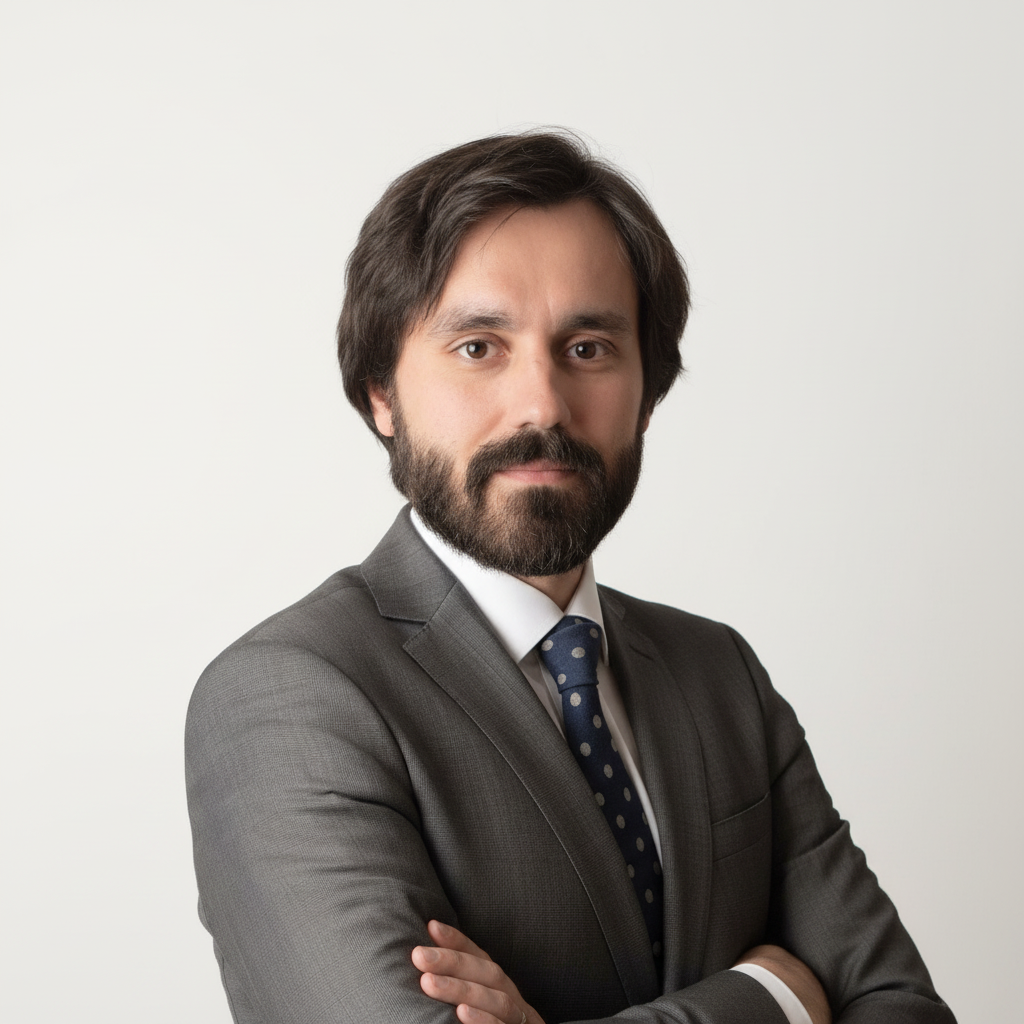
Raphael Grieco, CMT, FRM
Raphael Grieco is a seasoned cross-asset investor, specializing in family office strategy, venture capital and innovative tech ecosystems.
Raphael has 20 years of experience across private banking (HSBC, Indosuez), multi-family offices (Quilvest, WFM), investment banking (Société Générale, BNP Paribas), direct VC investing with his own 150-member angel syndicate Olive Capital, and digital assets (Crypto Valley Association, NFT Factory, advisor to the MINA Foundation, and ambassador for Base). He has helped UHNWIs and family offices structure cross-asset portfolios including venture capital, while championing access to emerging private strategies and technologies worldwide.
Raphael founded La French Tech Switzerland, growing it to 3,000 members and earning official French government accreditation, and built UPCOMINGVC®, Europe’s first VC education program, running 400+ workshops and expanding an ambassador network to 10 countries. His podcast Runway Series reached the global top 2.5% on Apple Podcasts across 150+ episodes, and led research for IMD Business School about debunking venture capital myths for pension funds and UHNWIs.
Raphael has a Masters degree in Finance and Management from SKEMA Business School, is a CMT and FRM charter holder, and successfully completed the VC Lab program.